
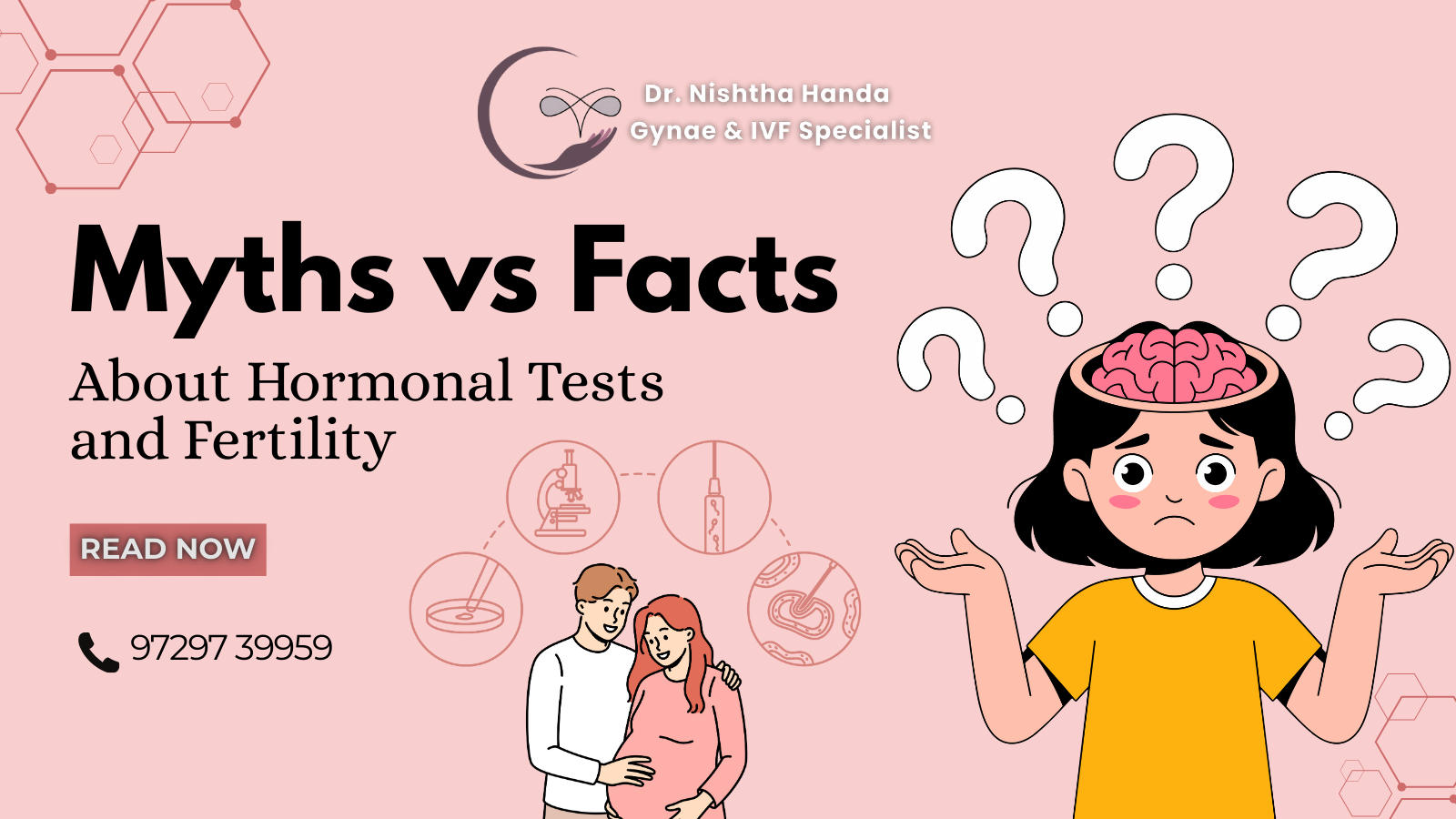
Hormonal tests play a crucial role in understanding fertility, yet they are often surrounded by confusion, fear, and misinformation. Many couples delay fertility evaluation because of common myths related to hormone testing. According to Dr. Nishtha Handa, early and accurate hormonal assessment helps identify underlying issues and improves the chances of successful conception.
At a trusted Best IVF Clinic in Patel Nagar, hormonal testing is explained in a clear, patient-friendly manner so individuals can make informed decisions without unnecessary anxiety.
Hormonal tests are blood investigations that measure specific hormones responsible for ovulation, menstruation, sperm production, and pregnancy support. These tests help doctors understand how well the reproductive system is functioning in both women and men.
They are commonly advised when couples face irregular periods, difficulty conceiving, repeated pregnancy loss, or before planning IVF or other fertility treatments.
Fact: Fertility is a shared responsibility. Hormonal tests are equally important for men. Male hormone levels such as testosterone, FSH, and LH directly affect sperm production and quality. At a Best IVF Clinic in Patel Nagar, both partners are evaluated together for accurate diagnosis.
Fact: Normal hormone levels do not always guarantee easy conception. Fertility also depends on egg quality, sperm health, fallopian tube function, uterus health, and lifestyle factors. Hormonal tests are one part of a complete fertility assessment.
Fact: Hormonal testing is simple, safe, and minimally invasive. It involves a routine blood sample and poses no long-term risks. Patients at a Best IVF Clinic in Patel Nagar are guided through the process to ensure comfort and clarity.
Fact: Hormonal imbalances are common and treatable. Conditions like PCOS, thyroid disorders, or low ovarian reserve can often be managed with medications, lifestyle changes, or assisted reproductive techniques.
Some commonly recommended hormonal tests include:
These tests help IVF and gyne specialists design personalized treatment plans.
Male fertility hormones are equally important and may include:
Evaluation at a Best IVF Clinic in Patel Nagar ensures no aspect of fertility is overlooked.
Hormone values must always be interpreted based on age, menstrual cycle day, symptoms, and medical history. Self-interpretation or online assumptions often lead to unnecessary panic. Dr. Nishtha Handa emphasizes personalized consultation to explain results clearly and recommend the right next steps.
Hormonal tests are powerful diagnostic tools—not reasons for fear or confusion. Understanding the difference between myths and facts empowers couples to seek timely care and avoid delays in treatment. With expert guidance, hormonal imbalances can be managed effectively, improving fertility outcomes.
If you are planning a pregnancy or facing conception challenges, consulting an experienced IVF and gyne specialist at a Best IVF Clinic in Patel Nagar can help you take confident, informed steps toward parenthood.
FAQs
Q1. What are hormonal tests in fertility treatment?
Hormonal tests measure reproductive hormones that help assess ovulation, egg reserve, sperm production, and overall fertility health.
Q2. When should hormonal tests be done?
They are usually recommended after difficulty conceiving, irregular periods, or before starting IVF treatment.
Q3. Are hormonal tests mandatory for IVF?
Yes, they are essential to plan safe and effective IVF treatment.
Q4. Can hormonal imbalance be treated successfully?
In most cases, yes. With proper medical care and lifestyle changes, hormonal balance can often be restored.
Q5. Where can I get reliable hormonal fertility testing?
You can consult Dr. Nishtha Handa at a Best IVF Clinic in Patel Nagar for accurate testing and personalized fertility care.

Dr. Nishtha Handa is a highly accomplished and compassionate Obstetrician, Gynaecologist, and Fertility Specialist based in New Delhi. She holds an MBBS and MS in Obstetrics & Gynaecology, along with a DNB, and has pursued advanced fellowships in Minimal Access Surgery and Reproductive Medicine. Trained at ABVIMS & Dr. Ram Manohar Lohia Hospital, Delhi, she is committed to providing holistic and evidence-based care to women across all stages of life.



.png)
.png)
.png)
.png)